For many students in Indiana, the dream of higher education collides with cost, time, and uncertainty. Traditional four-year paths can feel out of reach—not because of ability, but because of real-world constraints. That’s where degrees at Ivy Tech Community College step in. They’re not just alternatives. They’re strategic, career-focused routes designed to deliver value fast.
Ivy Tech isn’t trying to mimic a university. It’s doing something more urgent: aligning education with what employers actually need. Whether you're a high school graduate, a working adult, or someone looking to pivot careers, Ivy Tech offers degrees that matter—without the six-figure debt.
From nursing to cybersecurity, manufacturing to business, Ivy Tech’s programs are built to get people hired. And with over 70 campus locations and strong online options, access isn’t a barrier. The real question isn’t if you can afford to go to Ivy Tech—it’s whether you can afford not to.
Why Students Choose Degrees at Ivy Tech
College shouldn’t be a gamble. Yet too many students invest years and tens of thousands into degrees that don’t lead to jobs. Ivy Tech flips that model by anchoring every program in workforce demand.
Consider this: Indiana faces persistent labor shortages in healthcare, advanced manufacturing, and IT. Ivy Tech responds with targeted degree offerings that fill those gaps. Graduates don’t just get diplomas—they get job offers.
Take the Associate of Science in Nursing (ASN). It’s a two-year program, but it leads directly to licensure as a registered nurse (RN). Graduates often secure positions before they even walk across the stage. And because Ivy Tech partners with hospitals and clinics statewide, clinical rotations aren’t just training—they’re networking opportunities.
Another big draw? Cost. The average annual tuition at Ivy Tech is under $4,000 for in-state students—less than a quarter of what many public universities charge. That means graduates can start their careers without being buried in debt.
But affordability only matters if the education is respected. Employers across Indiana know Ivy Tech graduates are job-ready. That reputation is built on curriculum shaped by industry advisors and hands-on learning built into nearly every program.
Types of Degrees Offered at Ivy Tech
Ivy Tech doesn’t offer hundreds of majors. It focuses on the ones that move the needle. Its degree structure is streamlined but comprehensive:
- Associate of Science (AS) – Designed for students planning to transfer to a four-year university. Strong in math and science, ideal for engineering or science pathways.
- Associate of Arts (AA) – Transfer-focused with a liberal arts core. Perfect for future teachers, writers, or business majors.
- Associate of Applied Science (AAS) – Career-first degrees. These are for students who want to graduate and get hired immediately.
- Technical Certificates and Diplomas – Shorter programs (often under a year) that stack into AAS degrees. Great for upskilling fast.
Each degree category serves a different goal. The AS and AA keep doors open for bachelor’s degrees. The AAS gets you working—fast.
For example, the AAS in Cybersecurity doesn’t just cover theory. Students work with real firewalls, conduct penetration testing, and learn incident response—all using industry-standard tools. By graduation, they’re ready for roles like security analyst or network technician.
Meanwhile, the AS in Engineering allows seamless transfer to Purdue, IUPUI, or other Indiana universities. Students complete their first two years at a fraction of the cost, then finish their bachelor’s without losing credits.
High-Demand Programs
with Career Outcomes
Not all degrees are created equal. At Ivy Tech, the strongest programs reflect real-time labor market data. Here are four where demand consistently outpaces supply:
#### 1. Nursing (ASN) - Job Placement Rate: Over 90% pass the NCLEX on first attempt - Median Starting Salary: $65,000+ - Employers Hiring: Community hospitals, outpatient clinics, long-term care facilities

Nursing students get clinical experience early—often starting in the first semester. That hands-on exposure builds confidence and competence long before graduation.
#### 2. Advanced Manufacturing - Specialties: CNC machining, automation, industrial maintenance - Industry Partners: Subaru, Berry Global, Whirlpool - Credential Included: Many programs embed OSHA and NIMS certifications
This isn’t shop class. Students work with robotics, programmable logic controllers (PLCs), and 3D modeling software—skills directly transferable to modern factory floors.
#### 3. Information Technology (AAS in IT) - Tracks: Network administration, cloud computing, cybersecurity - Certifications Prep: CompTIA A+, Network+, Security+ - Remote Work Potential: High
With remote and hybrid IT roles on the rise, this degree opens doors beyond Indiana. Graduates have landed roles at Salesforce, Infosys, and local MSPs (managed service providers).
#### 4. Business (AAS in Business Administration) - Focus Areas: Management, marketing, entrepreneurship - Real-World Projects: Students create business plans, run simulations, and pitch to local investors
This program is ideal for aspiring small business owners or retail managers. The curriculum emphasizes practical skills like budgeting, customer relationship management (CRM), and digital marketing.
Online and Hybrid Degree Options
You don’t need to be near a campus to earn a degree at Ivy Tech. Over 50 programs are available fully online—including popular ones like:
- Associate of Arts (AA)
- Associate of Science (AS)
- AAS in Business Administration
- AAS in IT
- AAS in Early Childhood Development
Online courses are not recordings of lectures. They’re built for engagement—weekly discussions, case studies, and project-based assignments keep students connected and active.
Hybrid programs offer the best of both worlds. Nursing students, for instance, complete theory online but attend labs and clinicals in person. This flexibility helps working adults balance jobs, family, and school.
One student in Fort Wayne works full-time at a call center and takes online business classes at night. She’s on track to graduate in 18 months—something a traditional program would have made impossible.
Transferring from Ivy Tech to a Four-Year University
A common myth: community college limits your options. The opposite is true at Ivy Tech.
Through the Transfer Single Articulation Pathway (TSAP), students in AA and AS programs can transfer to any public university in Indiana with no loss of credits. That includes IU, Purdue, and Ball State.
Here’s how it works: - Complete an AA or AS at Ivy Tech - Maintain a 2.0 GPA (some programs require higher) - Apply to a partnered university - Enter as a junior with full junior standing
It’s a financial game-changer. A student can save $30,000 or more on their first two years, then earn a bachelor’s degree from a flagship university.
We’ve seen students transfer into engineering, education, computer science, and even pre-med tracks. One Ivy Tech grad transferred to IUPUI, completed a BS in Biology, and is now in medical school.
The key? Planning early. Students should meet with academic advisors to ensure every course aligns with their transfer goal. A single misstep—like taking a non-transferable tech elective—can delay graduation.
Support Services That Improve Completion Rates
Going to college is hard. Staying in college is harder—especially for non-traditional students. Ivy Tech knows this, which is why it invests heavily in student support.
Every degree-seeking student gets: - Dedicated Academic Advisor – Helps with course selection, transfer planning, and degree audits - Tutoring Centers – Free, drop-in help for math, writing, and science - Career Services – Resume reviews, mock interviews, job fairs - Emergency Aid – Grants for students facing sudden financial crises (car repair, medical bill, etc.)
One initiative, Ivy Cares, connects students with food pantries, mental health counseling, and housing assistance. Because you can’t focus on biology if you’re worried about rent.
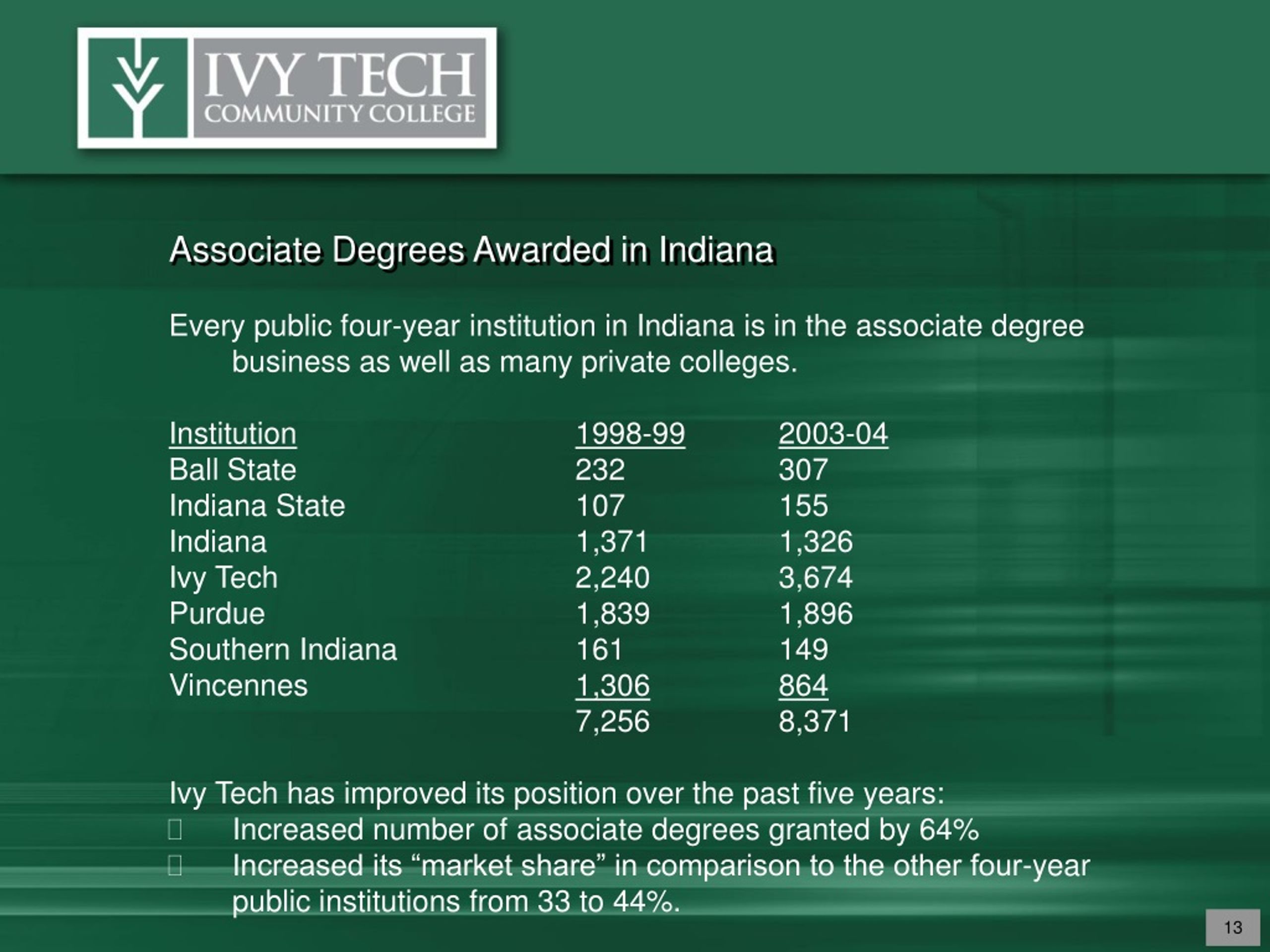
These services aren’t just nice-to-have. They’re why Ivy Tech has improved its graduation rate by 15% over the past five years. Completion isn’t left to chance—it’s supported.
Common Mistakes Students Make (And How to Avoid Them)
Even with strong support, students stumble. Here are the most frequent missteps—and how to sidestep them:
- Taking non-transferable courses without realizing it
- → Fix: Meet with an advisor every semester. Use the TSAP checklist.
- Overloading credits in the first term
- → Fix: Start with 9–12 credits. Adjust after seeing how work and family fit.
- Ignoring employer partnerships
- → Fix: Attend career fairs. Ask instructors about internship leads.
- Delaying financial aid filing
- → Fix: Submit FAFSA by the Ivy Tech priority deadline—usually March 1.
- Treating online classes like passive content
- → Fix: Treat online coursework like a job. Set a schedule, log in daily, participate.
Small choices compound. The student who waits until week six to ask for tutoring often fails. The one who meets their advisor early and sticks to a plan? They graduate on time.
How to Enroll in a Degree at Ivy Tech
Getting started is simpler than most expect.
Step 1: Explore Programs Visit ivytech.edu and use the “Program Finder” to filter by interest, campus, or online availability.
Step 2: Apply The application is free and takes 15 minutes. No SAT or ACT required.
Step 3: Complete FAFSA Even if you don’t think you qualify, file it. Many students are surprised by grants and work-study offers.
Step 4: Take Placement Test (if needed) Ivy Tech uses Accuplacer or SAT/ACT scores to place students in the right math and English courses.
Step 5: Meet with an Advisor This is non-negotiable. Your advisor confirms your degree plan and enrolls you in classes.
Step 6: Attend New Student Orientation Online or in-person, this session covers tools, resources, and expectations.
Once enrolled, students are assigned a success coach—especially helpful during the first semester.
Final Thoughts: Degrees at Ivy Tech Are Career Launchers
Ivy Tech isn’t for everyone. If you’re set on a liberal arts thesis or Big Ten football, it’s not the fit. But if you want a practical, affordable, respected path to a good job, there’s no better starting point in Indiana.
Degrees at Ivy Tech are built for the real world. They’re shorter, cheaper, and more directly tied to employment than most bachelor’s programs. And with transfer pathways, they’re not the end of the line—they’re a smart first move.
The best time to start was last year. The second-best time is now. Pick a program, apply, and start building the career you need—without the debt you don’t.
FAQ
What degrees does Ivy Tech offer? Ivy Tech offers associate degrees including Associate of Science (AS), Associate of Arts (AA), and Associate of Applied Science (AAS), plus technical certificates in fields like healthcare, IT, and manufacturing.
Can I transfer from Ivy Tech to a four-year university? Yes. Through the Transfer Single Articulation Pathway (TSAP), Ivy Tech credits transfer seamlessly to public universities in Indiana, including IU and Purdue.
Are Ivy Tech degrees respected by employers? Yes. Employers across Indiana hire Ivy Tech graduates for their hands-on training and job-ready skills, especially in healthcare, tech, and advanced manufacturing.
How much does a degree at Ivy Tech cost? In-state tuition averages under $4,000 per year. Financial aid, grants, and scholarships are available to further reduce costs.
Can I earn a degree online at Ivy Tech? Yes. Over 50 programs—including business, IT, and liberal arts—are available fully online with the same curriculum as on-campus courses.
Is financial aid available at Ivy Tech? Yes. Students can apply for federal aid (FAFSA), Indiana state grants, and institutional scholarships.
Do Ivy Tech programs include certifications? Many programs include industry credentials like CompTIA A+, NIMS, or OSHA, which enhance job readiness and marketability.
FAQ
What should you look for in Degrees at Ivy Tech: Affordable Paths to In-Demand Careers? Focus on relevance, practical value, and how well the solution matches real user intent.
Is Degrees at Ivy Tech: Affordable Paths to In-Demand Careers suitable for beginners? That depends on the workflow, but a clear step-by-step approach usually makes it easier to start.
How do you compare options around Degrees at Ivy Tech: Affordable Paths to In-Demand Careers? Compare features, trust signals, limitations, pricing, and ease of implementation.
What mistakes should you avoid? Avoid generic choices, weak validation, and decisions based only on marketing claims.
What is the next best step? Shortlist the most relevant options, validate them quickly, and refine from real-world results.